Experience-Based Learning in India
Urban Growth and Sustainable Futures in Mumbai
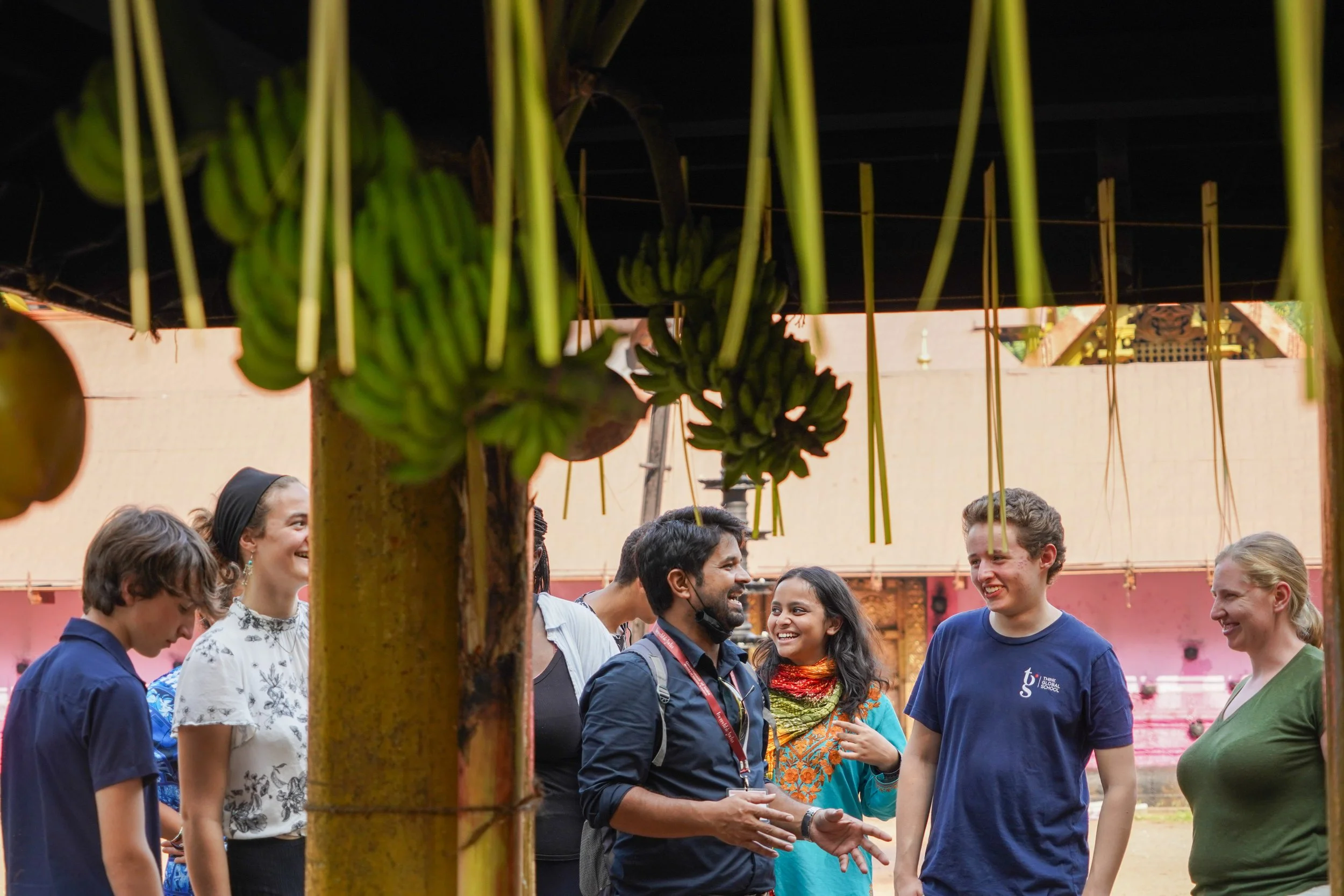
During this experiential learning module in India, students explored the complex relationship between urban growth, sustainability, and quality of life in one of the world’s fastest-growing cities: Mumbai. Through interdisciplinary inquiry and engagement with the local context, students examined how environmental, social, and economic factors shape urban development and the challenges cities face in creating sustainable futures.

Path to Sustainability: Urban Futures in Mumbai
Driving Question: How can urban settlements be planned to balance sustainable development and quality of life?
Interdisciplinary Themes: Environmental Systems, Human Geography; Urban Planning; Sustainability
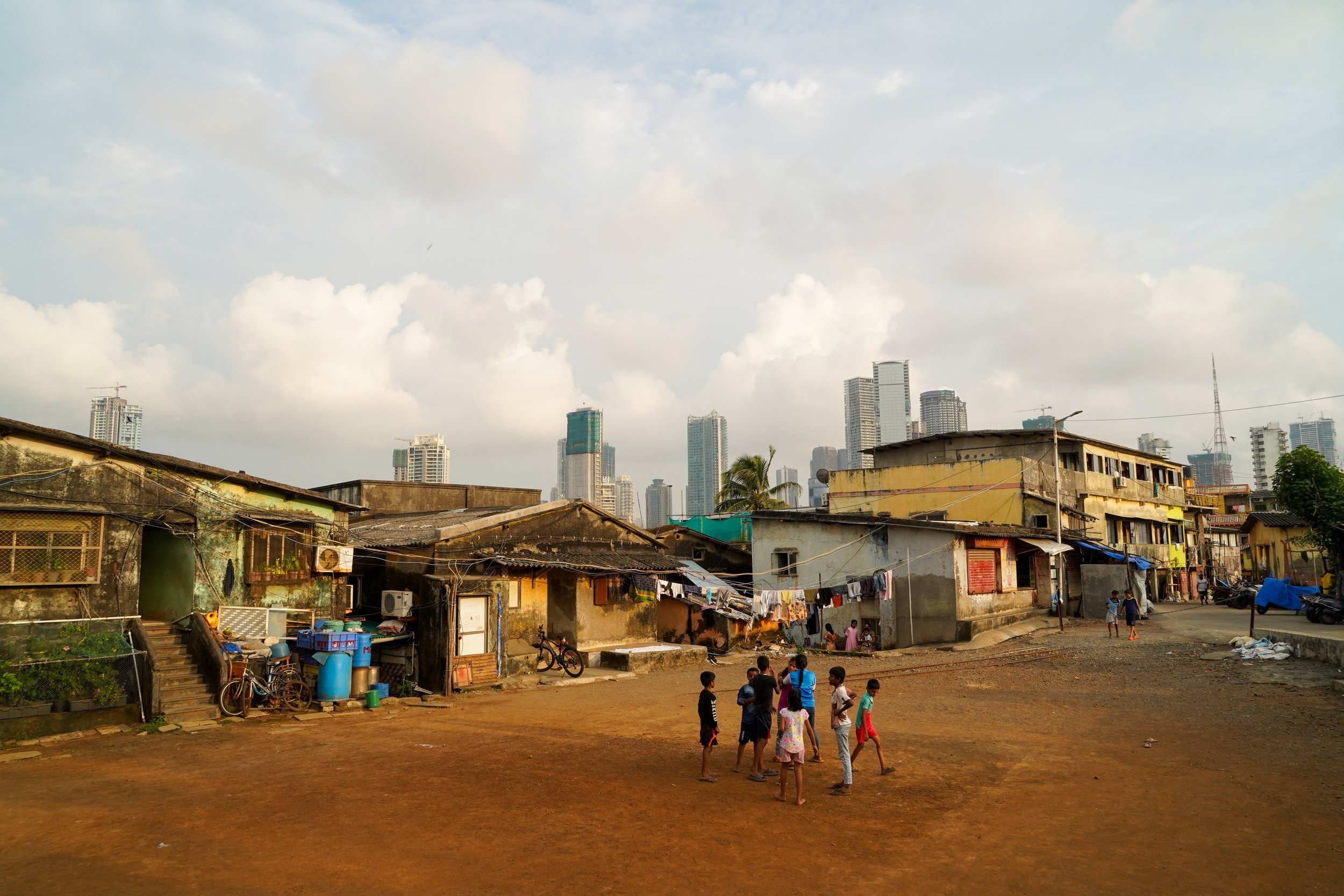
Learning Experience: Mumbai underwent significant urban crowding and growth in its history, leading to various problems caused by overpopulation, including reduced green spaces, limited water availability, poor sanitation, and human health indicators, among others. In the project, students explored how urban planning addressed issues of sustainability and quality of life in Mumbai. They examined the balance between environmental sustainability, socio-economic factors, and geo-political needs. As they engaged in Mumbai's complex urban system, they learned about what was being done to improve access to clean water, sanitation and waste management, production of green spaces and urban farms, access to transportation, and reduction of resource use, including pivoting to clean energy.
Summative Product: A 3-5 minute sustainable urban plan presentation showing what could be done to support the community in their improvement of one or more study areas (water, sanitation, urban food, green spaces, transportation, and energy and resource reduction). Your plan should address how you have approached the following steps of co-created urban planning: Dialogue, understanding, commitment, participation; Vision, and idea creation.
Learning Reflection: This project encouraged students to think critically about the complexities of urban sustainability and the interconnected nature of environmental, social, and economic systems. By engaging with the real-world context of Mumbai, learners developed a deeper appreciation for the challenges cities face and the importance of collaborative, community-centered approaches to sustainable development.